Winter. Cold. Dark. Movies! Watched in the last week:
Inception
The Warriors
SNL Best of Will Ferrell
The Messenger
Pan's Labyrinth
The Wild Parrots of Telegraph Hill
Let The Right One In
Big Man Japan
Fear and Loathing in Las Vegas
I think I'm forgetting one...
Showing posts with label film. Show all posts
Showing posts with label film. Show all posts
1.05.2011


12.06.2010
Screening this Thursday
Haven't had a chance to see When We Stop Counting yet? It will be screening on Thursday the 9th at Indigo Bridge Bookstore at 7 PM.
While I'm on the subject, Brent and I are trying to raise funds to get the film broadcast-ready. If you can spare some extra, please consider donating at this link.
While I'm on the subject, Brent and I are trying to raise funds to get the film broadcast-ready. If you can spare some extra, please consider donating at this link.
10.08.2010
Premiere of When We Stop Counting

Facebook | Premiere of When We Stop Counting
Please join us at the Mary Riepma Ross Media Arts Center on October 26th at 7 PM for the premiere of When We Stop Counting.
Students and directors Brent Meier and Elisabeth Reinkordt will be answering questions following the screening.
The film will also be premiering in Crete at Doane College's Heckman Auditorium on Thursday, October 28th, also at 7 PM.
3.03.2010
Leighton Pierce's videos on Vimeo
Wow, I'm so glad Leighton Pierce is on Vimeo.
Leighton Pierce's videos on Vimeo
This is one of my favorites:
Leighton Pierce's videos on Vimeo
This is one of my favorites:
m) 2002. Fall (3 parts) from Leighton Pierce on Vimeo.
www.leightonpierce.com
A struggle to hold on to the world, the various worlds we try to inhabit.
Shot in the south of France during the fall of 2001.
Selected Awards:
Ann Arbor Film Festival
San Francisco International Film Festival
Athens Film Festival
Toronto Images :Honorable Mention
Screenings:
Museum of Contemporary Art, Montreal, Dallas Video Festival, Mill Valley Film festival, Louisville Film Festival etc.
2.15.2010
Who Knew?
In other news, I'm spending my little employee benefit of a state holiday working on my Pecha Kucha presentation.

Hope to see you at the Bourbon Theatre on the 24th!
1.24.2010
12.03.2009
This is exciting
Ben Russell is on Vimeo.
That's the first film of his I ever saw, back in 2003 in my first 16mm film class with Leslie Thornton.
This one, he had in the Movies with Live Soundtracks that played in the very very crowded upstairs of some building at RISD that I forget the name of. That was a great show.
I could embed all of his work here, but that would be annoying. Just go over to his Vimeo page and enjoy.
Daumë from Ben Russell on Vimeo.
(7:00, 16mm, color/B/W, sound, 2000)
“One of the strangest films I have ever seen; its characters come and go as if they’re ‘primitives’ posing for the camera, either obeying or fighting an ethnographer’s controlling eye.” - Fred Camper, Chicago Reader
That's the first film of his I ever saw, back in 2003 in my first 16mm film class with Leslie Thornton.
The Red and the Blue Gods from Ben Russell on Vimeo.
(8:00, 16mm, live sound, 2005)
An ethnographic field report in which the Anthropologist describes the mythic creation of an unnamed ‘sun-scraping structure’ through the ritualized actions of the Red and the Blue Gods.
Performed with live narration and sound effects over a pre-recorded soundscape.
This one, he had in the Movies with Live Soundtracks that played in the very very crowded upstairs of some building at RISD that I forget the name of. That was a great show.
I could embed all of his work here, but that would be annoying. Just go over to his Vimeo page and enjoy.
7.16.2009
dial H-I-S-T-O-R-Y
My friend Alex Provan has an interview with Johan Grimonprez in the interview issue of Bidoun.
dial H-I-S-T-O-R-Y was part of the screening schedule for my senior seminar in documentary production, paired with One Day in September, and I loved it instantly. You should probably read Alex's interview, then watch both films.
dial H-I-S-T-O-R-Y was part of the screening schedule for my senior seminar in documentary production, paired with One Day in September, and I loved it instantly. You should probably read Alex's interview, then watch both films.
6.16.2009
Rapha Lincoln
Beautifully shot, though I find it somewhat clichéd & anachronistic to use a leader flare effect on what is clearly video. Read the Rapha journal here.
4.25.2009
Good Morning, Sunset Park
It was an early Saturday morning. I was going to do the Spring Fling ride, but my crew kinda fell through and it's cold and rainy. I was up, though, and so were a pack of poets in Brooklyn.

Despite what she may have feared, Jules will never look like a man to me. We also have similarly colored bedspreads, despite our distance.

Mathias got a little bit animated when we started discussing what train I should take to come over for breakfast. The I-80 isn't running express today. Then I made the first joke in history to combine big ups, Atlas, and Ayn Rand. It happened because I was illustrating all the mess I would be bringing with me to breakfast.
 Mathias went to start assembling breakfast with Heather Green, and Cindy King showed up. We made lots of stump faces. Teeth, they're bitey.
Once I decided that the trek to Sunset Park was just too far south in Brooklyn, I found some more local fare with Conrad at Tina's, aka the Nascar cafe. I forgot my camera, though, so you'll just have to imagine how awesome it was. Afterward, we stopped at Cultiva for some excellent espresso and a few DVD purchases for me. It's going to be harder to motivate toward editing now that I have one of my broadcast monitors set up in the bedroom and One Day in September, Mi Vida Loca, Far From Heaven, and High Fidelity (yeah, ok, one guilty pleasure) to watch.

Despite what she may have feared, Jules will never look like a man to me. We also have similarly colored bedspreads, despite our distance.

Mathias got a little bit animated when we started discussing what train I should take to come over for breakfast. The I-80 isn't running express today. Then I made the first joke in history to combine big ups, Atlas, and Ayn Rand. It happened because I was illustrating all the mess I would be bringing with me to breakfast.
 Mathias went to start assembling breakfast with Heather Green, and Cindy King showed up. We made lots of stump faces. Teeth, they're bitey.
 Once I decided that the trek to Sunset Park was just too far south in Brooklyn, I found some more local fare with Conrad at Tina's, aka the Nascar cafe. I forgot my camera, though, so you'll just have to imagine how awesome it was. Afterward, we stopped at Cultiva for some excellent espresso and a few DVD purchases for me. It's going to be harder to motivate toward editing now that I have one of my broadcast monitors set up in the bedroom and One Day in September, Mi Vida Loca, Far From Heaven, and High Fidelity (yeah, ok, one guilty pleasure) to watch.
4.13.2009
Minimalist Realism, Showing What You See, & the Female Eye

Wendy & Lucy
dir. Kelly Reichardt, 2008
The portentous opening shots of trains in Wendy & Lucy leave no doubt exactly where Wendy Carroll (Michelle Williams) is headed, but the hour and twenty minutes we spend with her over the few days she spends in an unnamed Oregon town are no less entrancing.
(Un)necessary brief plot synopsis: A 20-something woman named Wendy is en route from Indiana with her dog Lucy in search of seasonal cannery work in Alaska. She's got short hair, wears a blue hoodie, western shirt & cut-off corduroy shorts, drives an '88 Honda Accord, and it breaks down in a town in Oregon. This is one of a few things that do not go well and leave a major dent in the sum at the bottom of the page in the meticulously kept notebook in which she tracks her dwindling finances.

Oh, the beauty of film! Shot on Super-16, Wendy & Lucy is full of impeccable colors, especially in forest scenes, gorgeously done night scenes full of all the grain that results from an optical blow-up to 35mm, and depth of field simply not possible on video.

As Lucy (played by Reichardt's dog) makes friends with a group of crust-punk types around a bonfire and Wendy follows to retrieve her, Reichardt's camera seems to become perspectival, focussing* from face to face as if Wendy is gauging trustworthiness. It is, in my mind, the fact that this is a female eye (lens) tracing the path of the female protagonist's eye that makes this scene work; were the camera to float away from the person speaking (a drifter played by Will Oldham) to other faces around the bonfire -- including lingering shots on the only other and very tough-looking female of the group -- without the distinct sense that we are engaged in the self-aware nature of Wendy's position as a solo female traveler, this would appear a sloppily edited sequence. In a far more dramatic echoing of the sense in this scene later in the film, I began to think that I had never seen such material shot in that manner before. There are simply so few women making films that it is hard to make a compelling case that the gaze of the female director is different, but this film makes solid strides in that direction.

Furthering its minimalism, the film eschews a score, opting instead for a repeated theme -- composed by Oldham and played slighlty amplified -- of Wendy humming. The overt pathos of dramatic orchestral elements would ruin the pain we feel, slowly & experientially, for Wendy's predicament. Reichardt lets moments happen. Birds fly by, high in the air, and it is clear from the focus-pulling that this was a shot taken because it just happened. It is downright beautiful.

Reichardt is a gifted, principled director. The full text of a fantastic interview done by Slant Magazine is worth the read. A professor at Bard College, she gives solid pushback when the interviewers begin asking questions about how her filmmaking might change with the onset of "success."
Amen.
Slant: You've talked before about wanting to continue working at these sensationally low-budget levels. Isn't that something filmmakers tend to say and then disregard once they meet with a certain level of success?
KR: Well, what's your definition of success? I find that to be a fucking annoying question, I have to say.
Slant: Why is that?
KR: This constant implication that success has one picture is so limited—and talk about American! I'm constantly asked this, as if teaching is some loser profession, or an uninteresting place to be. I've been out in L.A. for five days with my film, just doing stuff that I've never done before, press junkets and stuff, and I'm like—this is it? This is what everybody thinks is the most special fucking thing on the planet? Are you kidding me? It melts your brain. It's really hard to stay small, actually. That I've been able to make these last two films without anybody paying any fucking attention and just go off and have complete artistic freedom—what are you gonna trade that for? What do you consider success, since you're asking me that question?
Slant: I think I was just suggesting that if you were to raise more, you'd probably spend it wisely. There's no discernable difference between the scale of your films and a Woody Allen film, but he can spend 20 million and the money buys access to more filmmaking tools and sought-after actors and so forth.
KR: Give me an example of a woman who can do that.
Slant: A woman who can insist on creative control and still raise 20 million?
KR: Yes.
Slant: I can't name any, but I have a reason why I can't.
KR: I have a reason too—there aren't any! Okay, forget about 20 million. Name a woman at the level of Gus Van Sant or Todd Haynes. Give me a female example of that.
Slant: Allison Anders. In 1996. I can't think of any on the spot, but in that category I know there are some.
KR: And she wasn't getting 20 million, by the way. She was living off a grant. Please. The idea that we're struggling to think of one that might have existed at some point—maybe that's why that question pisses me off. I'll also say that I can't think of a woman who has this benefit either: Lars von Trier and Terrence Malick can put out films and not have to go out and talk about them. If I want to think about what real success would be, it would be to be able to make a film without anyone breathing down my back and then not have to go out and talk about the film after you've gone to great lengths in your film to not over-explain everything. To not have to go out, that would be true success, but then you're just screwing over your distributor or your investors.
*I read the New Yorker. This is the spelling they use. I like it. Deal.
Images from the film's press site
4.02.2009
Home Grown Film Festival
"Homegrown" Film Festival
@ the Bourbon Theatre 1415 'O' Street - April 3rd, 9pm
Featuring local cinema arts on the big screen.
@ the Bourbon Theatre 1415 'O' Street - April 3rd, 9pm
Featuring local cinema arts on the big screen.
Free Admission-Free Popcorn
Playlist
"The Girl Who Could Run 600 Miles Per Hour" ~20mins
Directed by: Mark Thimijan
"I Want You To Know Something That Is True" ~2mins
Directed by: Jake Gillespie
"Neighbors" ~5mins
Directed by: Aaron Holmes
"Broken Circle" ~20mins
Directed by: Aaron Sawyer
"Red Means Danger" ~2mins
Directed by: Jake Gillespie
"Creation Myth" ~5mins
&
Triptych- 1."Little Dances", 2."Dallas", 3."Las Golondrinas" ~10mins
Directed by: Elisabeth Reinkordt
"Orange Fuzzy" ~2mins
Directed by: Jake Gillespie
"M.O.N.S.T.E.R.S." ~15mins
Directed by: Robby Defrain
"Untitled" ~5mins
Directed by: Diane Nelson & Nate Young"
"Nice" ~2mins
Directed by: Jake Gillespie
"Treasure House" ~10mins
Directed by: Joe Younglove & Jacob Cammack
"Strange Medicine" ~10mins
Directed by: David S. Ozinga
"Jakefomercial" ~5mins
Directed by: Jake Gillespie
3.01.2009
She's a Talker

Neil Goldberg, 1993. Watch it here.
More than 70 gay men in their living rooms pet their cats and say "She's a talker."

2.19.2009
More Color from Michael Hernandez-Stern
Beautiful, uncut footage, graced with the markings of the Brown MCM transfer machine...
DIGI/HYPNO-TIZE from MNHS on Vimeo.
transfer of most recently developed film.
DIGI/HYPNO-TIZE from MNHS on Vimeo.
transfer of most recently developed film.
2.08.2009
"Adam"
New work out of USC -- cinematography by Jon Miller, and a score by Anderson Reinkordt! I particularly love the Edward Hopper-esque shot in this clip.
More about the work here.

More about the work here.
1.28.2009
TIE Retrospective, 2009
All you need for cinema to happen: A room with an audience, all facing the same direction, a source of light projecting above their heads, and darkness.
-Christopher May, director, TIE
There is a pause, space of black and silence, purposefully left between the short films. I describe to Jennie the need for a moment to clear the mind, come to the next piece fresh -- "like ginger & sushi," she retorts.
What follows are my notes and reactions to many of the films screened.
PROGRAM ONE
Necrology (Standish Lawder, 12 min, USA, 16mm, 1969-1970)
The only older piece of work in Program One of the show, Standish Lawder's motionless camera films people on an escalator, then projects this motion in reverse. The effect, of a flat mass of people ascending ad infinitum, brings to mind the Auffahrt (Ascension) -- countless souls in their own performative little worlds fleeting upwards on screen. At the end of the film, we are treated to a cast list full of imagined lives and ones constructed from what we see -- the secretary, menstruating, the man picking his nose, the Yalie, black. In this list of assignations, we are reminded of the projections we make onto others, strangers.
Dipping Sause (Luther Price, 10 min, USA, 16mm, 2005)
A series of Rube Goldberg devices propel the film toward varying torturous, fetishized conclusions.
Film for Invisible Ink, Case No. 142: Abbreviation for Dead Winter [Diminished by 1,794] (David Gatten, 13 min, USA, 16mm, 2007)
The screen is white. There are flecks, small variations in color, and the dust on the film is both evident and repetitive. Hair is focus-pulled. I ask Jennie if this is what winter in Nebraska is for her. She says it is, and like a kaleidoscope, only so much better.
July Fix (Jason Livingston, 3 min, USA 16mm, 2006)
How brilliant it is to take just small snippets of a pop song with appropriate pauses of silence -- we know to fill in the blank space, we do it automatically as the song is immediately in our head.
Nothing is over Nothing (Jonathan Schwartz, 16 min, USA/Israel, 16mm, 2008)
Toward the end, we see the eponymous shot, a stenciled bit of graffiti of Ahmadinejad sporting playboy bunny ears & bowtie with the words NOTHING IS OVER NOTHING just below. An Israeli solider stands next to the electrical box on which this is scrawled, posing for the camera. Schwartz's travelogue of Israel is full of blue -- from the opening shot of a blue door detailed with a Star of David in the foreground as a Hasid stands in the right half of the screen, slightly back to the mother in a blue denim dress holding a Russian Blue cat to the bathroom encrusted in blue tile, blue window panes to a man and a woman covered in mud at a spa to another stencil, this of an upside-down machine gun, done in a pale blue spray paint -- and this produces the effect of nearly convincing us the film has been tinted. Apparently, his camera was broken; he did not realize he was shooting in more than 24 frames per second. The effect of the all-encompassing slow motion is deeply profound, and it was quite striking to see it at this precise historical moment.
Sacred Space (David Chaim Cohen, 14 min, USA, 35mm, 2007)
Stan Brackhage revisited, not through technique but in effect, and ramped up on tactile, seemingly three-dimensional steroids. And to think this was a student film from CalArts, made on 35mm. Amazing, mesmerizing, and I never wanted it to end.
...
PROGRAM TWO
Dollar Portrait (Matthew Perino, 4:44 min, USA, 16mm, 2008, Silent)
In the positive and negative optical printing, parts of money begin to resemble sprocket holes.
Whirl (Scott Banning, 7:35 min, USA, 16mm, 2007)
Lights on an amusement park ride look so blue, they've never looked so blue or purple all at once before. Sometimes, in their close-ups, they begin to look like anglerfish, deep underwater. This was originally black & white film that was then transferred and edited digitally, then projected and the projection filmed. The tint emerges in the digital space between film stocks.
Wot the Ancient Sod (Diane Kitchen, 17 min, USA, 16mm, 2001, Silent)
This portrait of leaves is a reminder of the incredible possibilities of a shallow depth of field, something only film can achieve.
To Be Regained (Zach Iannazzi, 10 min, USA, 16mm, 2008)
One of a few films done by young, devoted filmmakers, this one a graduate of Amherst. It's impressive to see documentary work -- a medium that traditionally requires a much higher ratio of footage to finished length -- done all on film. Iannazzi does plenty of hand processing, adding lovely grit to the footage of his own he cuts together with stock footage of salmon being...de-egged?
Trauma Victim (Robert Todd, 17 min, USA, 16mm, 2002)
This collection of shots and scenes seems to come deep from within the psyche. As waterfalls are projected, I find it impossible to keep my eyes from tracking downward with the water. Like its waterfalls, it is a pouring out of brain space.
Errata (Alexander Stewart, 7 min, USA, 16mm, 2005, Silent)
Nothing so beautiful has ever been done with a photocopier. Ink soaks like blood through the projected image sequences.
Metaphysical Education (Thad Povey, 4 min, USA, 16mm, 2003)
Made with a homemade optical printer, frames seem to slide horizontally, revealing their soundtracks in the otherwise hidden margins, bright and beautiful.
...
Official Program Notes
TIE on the web
1.21.2009
Auteur Theory

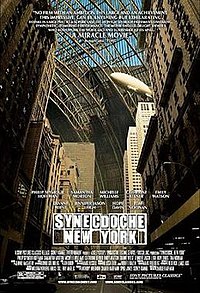 These two films (which I saw back to back the past two nights) struck me as prime examples of auteur theory. Take that for what it's worth.
1.12.2009
TIE Returns to the Ross

The fantastically curated TIE collection is returning to the Ross this Wednesday & Thursday. The past two years, Lincoln has been blessed with great programs and presentation from Christopher May, TIE's curator. This year should be no exception:
Since 2000, the internationally-based TIE festival has been a leading champion of artists still working in the medium of film, with a particular focus on both new and historical avant-garde cinema. TIE returns to UNL with two new programs specifically selected for The Ross by TIE founder/director Christopher May. The exhibition features an eclectic range of experimental films that illuminate the continuing vitality and beauty of celluloid, while subtle and at times obvious philosophical and thematic curatorial gestures conduct the flow of the programs. Both shows include highlights from TIE's 2008 international festivals, held in Buenos Aires, Argentina and Paonia, Colorado.
The TIE festival will feature two programs.
PROGRAM 1 will be shown on Wednesday, January 14 - 7:00pm
PROGRAM 2 will be shown on Thursday, January 15 - 7:00pm
Come join me. I'll be going to both, if I can help it. Oh, and since you're going to be stopping by the Ross, you should also probably find time to see Slumdog Millionaire, darling of the Golden Globes, and Synecdoche, NY, the latest adventure into Charlie Kaufman's brain.
...
I'm in McCook for work, teaching video editing to a group of 20-some 4th graders through high school seniors. Should be an adventure.
12.20.2008
My Ultimate Influence?
Mathias sent me this link this morning.
I used to sing this song all the time when I was little. My parents had a strict no-commercial-television policy, so all I watched was PBS, with a heavy dose of Sesame Street. This bordered on addiction, and my parents had VHS tapes full of episodes for the days it wasn't on.
This song is unbearably catchy.
I have the realization that I would have been perfectly suited to making documentaries for this vintage of Sesame Street.
These women are so happy to be making crayons.
And then I realize that it is more likely that this is in fact the overriding influence in my media lexicon.
Funny, this was supposed to be education about very different worlds for the young children of Harlem & the Bronx. We put up hay in the summer to feed the cattle in the winter, too!
Why can't this be my job, to make these? Why must childrens' programming be so gaudy and terrible now?
There is such a wealth of these -- I could go on forever. But here's one more for you to spark a rabbit hole of YouTube related videos.
If we had more salutes and dances for fruit, perhaps we'd have healthier children?
I used to sing this song all the time when I was little. My parents had a strict no-commercial-television policy, so all I watched was PBS, with a heavy dose of Sesame Street. This bordered on addiction, and my parents had VHS tapes full of episodes for the days it wasn't on.
This song is unbearably catchy.
I have the realization that I would have been perfectly suited to making documentaries for this vintage of Sesame Street.
These women are so happy to be making crayons.
And then I realize that it is more likely that this is in fact the overriding influence in my media lexicon.
Funny, this was supposed to be education about very different worlds for the young children of Harlem & the Bronx. We put up hay in the summer to feed the cattle in the winter, too!
Why can't this be my job, to make these? Why must childrens' programming be so gaudy and terrible now?
There is such a wealth of these -- I could go on forever. But here's one more for you to spark a rabbit hole of YouTube related videos.
If we had more salutes and dances for fruit, perhaps we'd have healthier children?
Subscribe to:
Posts (Atom)